
Bring Your Body to Work Day
Somatic Techniques, Emotional Intelligence, and Mental Well-Being

During Mental Health Awareness Month, many conversations about well-being focus on mindset, stress management, or positive thinking. Those things matter. But one of the most overlooked tools for improving emotional well-being and emotional intelligence is much more immediate:
Your body.
Whether I’m coaching leaders, working with teams, or supporting clients individually, I often incorporate somatic coaching techniques because they help people become more self-aware, more emotionally regulated, and more intentional in how they respond under pressure.
Many professionals, especially knowledge workers, spend most of their day “living from the neck up.” We analyze, strategize, solve problems, answer emails, lead meetings, and manage competing demands. We become so focused on thinking that we lose awareness of what is happening physically inside us.
At times, it can feel as though we are little more than heads with shoulders and arms attached.
The challenge is that emotions are not just cognitive experiences. They are physiological experiences.
Yes, thoughts can trigger emotions. You may suddenly think about a difficult conversation, an upcoming deadline, or a stressful interaction, and your body reacts almost immediately. Your stomach tightens. Your breathing changes. Your shoulders tense. Your jaw clenches.
Then something important happens.
We often interpret those bodily sensations as danger, stress, frustration, embarrassment, or anger, and that interpretation can intensify the emotional cycle even further. The thoughts feed the body’s response, and the body’s response feeds the thoughts.
This is why developing awareness of your physical reactions is so powerful.
When you become more attuned to the early signals in your body, you can intervene sooner, before the stress response escalates into full fight-or-flight activation.
That matters because once the nervous system becomes highly activated, our ability to think clearly, access empathy, regulate impulses, and make intentional choices becomes diminished. In extreme moments, this can lead to what psychologist Daniel Goleman referred to as an “amygdala hijack,” where emotional reactivity overrides thoughtful decision-making and people say or do things they later regret.
Somatic techniques help interrupt that escalation process at an earlier stage.
Imagine you are in a difficult conversation at work. Someone says something that frustrates you. Before you even fully process the thought, your body reacts. You notice tightness in your chest. Your brow furrows. Your breathing becomes shallow.
That moment is an opportunity.
Instead of pushing through or ignoring the signals, pause for a moment.
Take one slow, deep breath.Allow your shoulders to roll back and down.Unclench your jaw.Plant your feet firmly on the ground.Let your posture communicate steadiness and safety to your nervous system.
These small physical shifts help activate the parasympathetic nervous system, sometimes referred to as the “rest and digest” response. As the body settles, the mind often becomes clearer as well.
And isn’t that a core aspect of emotional intelligence?
The ability to notice what is happening internally, regulate yourself effectively, and choose your response rather than simply react.
This is especially important for leaders. Emotional intelligence is not simply about being agreeable or emotionally expressive. It is the ability to maintain awareness, clarity, and intentionality under pressure. Leaders who can regulate themselves are often better equipped to navigate conflict, communicate effectively, and create psychological safety for others.
A Simple Practice
One way to begin building somatic awareness is through a brief daily check-in.
Several times a day, pause for 60 seconds and ask yourself:
What sensations am I noticing in my body right now?
Is there tension anywhere?
How is my breathing?
What emotion might my body be signaling before my mind fully catches up?
Then take three slow breaths, allowing your exhale to lengthen slightly each time.
This is not about suppressing emotion. It is about recognizing emotional activation earlier, so you have more choice in how you respond.
It begins with noticing your body.
At Cutts Consulting, LLC, we help leaders, teams, and organizations strengthen emotional intelligence, improve communication, reduce burnout, and create healthier, higher-performing workplace cultures through coaching, consulting, and training grounded in psychology and human behavior.
If your organization is looking to strengthen leadership effectiveness, team dynamics, employee well-being, or emotional resilience in the workplace, we would welcome the opportunity to connect.
Because sometimes the path to better leadership and better workplace outcomes does not begin with doing more.
It begins with learning how to pause, regulate, and respond with greater awareness.
At Cutts Consulting, LLC, we help leaders, teams, and organizations strengthen emotional intelligence, improve communication, reduce burnout, and create healthier, higher-performing workplace cultures through coaching, consulting, and training grounded in psychology and human behavior.
If your organization is looking to strengthen leadership effectiveness, team dynamics, employee well-being, or emotional resilience in the workplace, we would welcome the opportunity to connect.
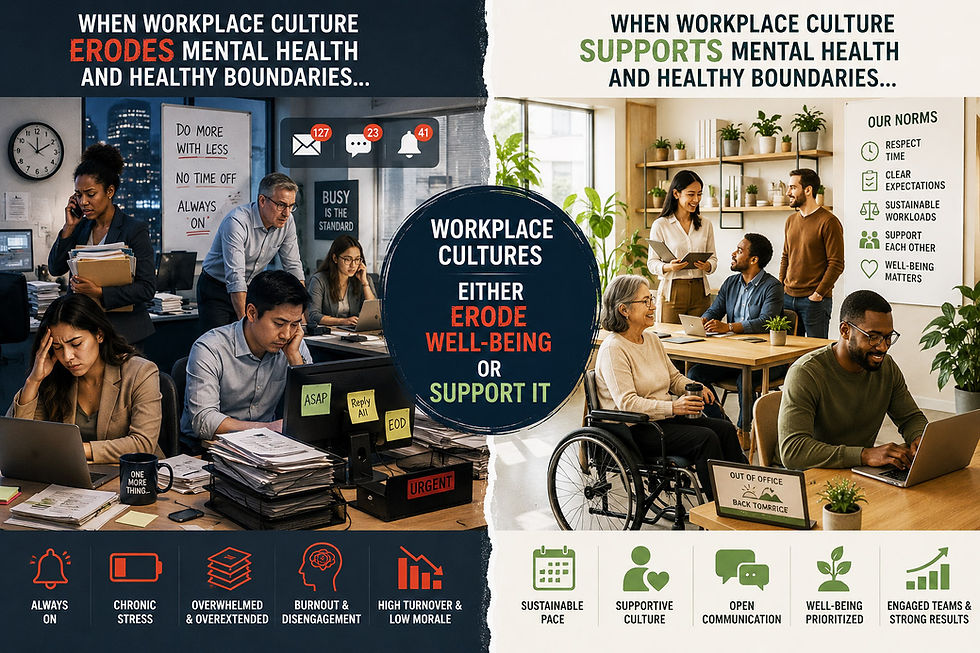
Because better leadership and healthier workplace cultures are not built through constant reactivity and overwhelm. They are built through awareness, regulation, intentional communication, and the ability to respond thoughtfully under pressure.


Comments